MONO FILAMENT TAPE

Single-Sided MONO Filament Tape: Reliable Reinforcement for Packaging and Bundling

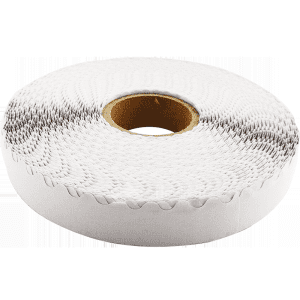
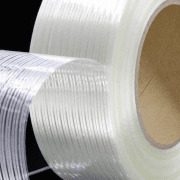
Packaging and transportation loads are often exposed to tension, impact and movement. In these conditions, surface adhesion alone may not provide enough reinforcement. Weasy single-sided striped filament tape is designed for applications that require both dependable adhesion and additional strength in the lengthwise direction, helping customers secure packages and bundled materials more consistently.

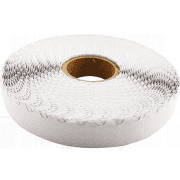
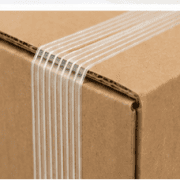
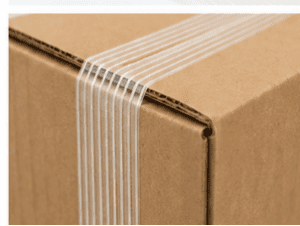
The tape combines a PET film backing, continuous fiberglass yarns arranged in parallel stripes and a hot-melt pressure-sensitive adhesive layer. The longitudinal fiberglass reinforcement improves tensile strength along the length of the tape, while the PET film supports dimensional stability. The adhesive provides quick bonding to suitable packaging surfaces when the tape is applied with adequate pressure.

Compared with ordinary packing tape, the reinforced structure is better suited to applications where stretching or splitting of the tape may affect load security. It can add concentrated reinforcement without covering a large area of the package. The transparent construction also allows the tape to remain visually unobtrusive on many cartons and bundled products.
MONO FILAMENT TAPE

Weasy single-sided MONO filament tape can be evaluated for reinforced carton sealing, pallet load reinforcement, bundling pipes or profiles and securing materials during storage and transportation. The most suitable width, adhesive grade and reinforcement level should be selected according to the package weight, substrate and expected handling conditions.

For reliable application, the bonding surface should be clean, dry and free from oil, dust and moisture. Firm and even pressure helps the adhesive make better contact with the substrate. Recycled corrugated board, coated surfaces, low-surface-energy films and rough materials may require a different adhesive grade, so sample testing under actual packaging and transport conditions is recommended before mass use.

At Weasy, width, length, adhesive performance, reinforcement configuration and packaging format can be matched to the customer’s processing and application needs. Our team can provide samples for evaluation, allowing customers to compare adhesion, tensile reinforcement and handling performance with their own materials before confirming a product specification.

For customers who need a practical balance of adhesion, longitudinal strength and convenient processing, Weasy single-sided striped filament tape offers a reliable industrial packaging solution. Correct product selection and proper application can help reduce package movement, reinforce load security and support more consistent handling throughout storage and transportation.
Filalament Tape

Filament Tape: Strong Bidirectional Reinforcement for Packaging and Heavy-Duty Bundling

Weasy Single-Sided Grid Filament Tape: Strong Bidirectional Reinforcement for Packaging and Heavy-Duty Bundling

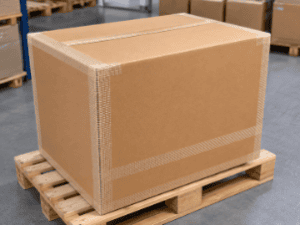
During packaging, warehousing, loading, and long-distance transportation, cartons and bundled products may be exposed to continuous tension, vibration, impact, stacking pressure, and repeated handling. Ordinary packaging tape may stretch, tear, or lose its holding strength under these demanding conditions, resulting in loose packages, damaged cartons, product movement, and additional repacking costs. Weasy single-sided grid filament tape is designed to provide stronger reinforcement for industrial packaging, carton sealing, heavy-duty bundling, and transportation fixing.

Our single-sided grid filament tape range uses a transparent film backing combined with bidirectional fiberglass reinforcement and a pressure-sensitive adhesive layer. Depending on the product grade, transparent PET or BOPP film can be used as the backing material. The fiberglass yarns are arranged in both longitudinal and transverse directions, forming a stable grid structure that helps distribute force more evenly across the tape. Compared with ordinary packaging tape or filament tape reinforced in only one direction, the grid construction provides better support when the package is exposed to stress from multiple directions.

The transparent PET-backed grades provide high tensile strength while also offering good resistance to abrasion, scratching, and moisture. The specially formulated pressure-sensitive adhesive delivers strong initial tack and reliable holding power, allowing the tape to bond quickly during packaging and bundling operations. Once applied with sufficient pressure, the tape helps maintain package stability and reduces the risk of loosening during storage and transportation.
Filalament Tape

Weasy single-sided grid filament tape is suitable for medium- and heavy-duty carton sealing, reinforcement of carton openings, strengthening of edges and stress points, bundling of heavy goods, fixing of industrial parts, and stabilization of products during handling and shipment. It can be applied across carton seams or around vulnerable areas where additional tensile support is required. For heavy or irregularly shaped products, the bidirectional fiberglass structure helps reduce local tearing and provides more balanced reinforcement than ordinary adhesive tape.

For export packaging and logistics operations, stable packaging is essential because repeated loading, warehouse stacking, road vibration, and sudden impact may weaken the carton structure. Applying grid filament tape to key stress areas can help reinforce the package without requiring complicated machinery. The transparent appearance also allows customers to strengthen printed cartons while keeping labels, graphics, and product information visible.

The tape is easy to apply in manual packaging operations and can also be adapted to regular industrial packing processes. Strong initial tack allows workers to position the tape quickly, while the fiberglass grid continues to provide structural reinforcement after application. This can help reduce carton splitting, loose bundling, product movement, and packaging rework.

Different applications require different backing materials, thicknesses, adhesive strengths, tape widths, and temperature performance. Weasy provides multiple single-sided grid filament tape grades to support different carton weights, product sizes, working environments, and cost requirements. Customized width, length, roll size, and packaging options are also available according to customer needs.

Before mass production, the tape should be tested on the actual surface and under the expected load, temperature, storage, and transportation conditions. Keeping the bonding surface clean and applying sufficient pressure can help achieve more stable adhesion.

By choosing Weasy single-sided grid filament tape, customers gain a practical reinforcement solution that combines strong adhesion, bidirectional fiberglass support, convenient application, and flexible product selection. It helps improve packaging stability, reduce the risk of carton damage and load movement, and support safer, more reliable industrial transportation.

Reliable Bonding and Sealing Solution for Automotive Lighting

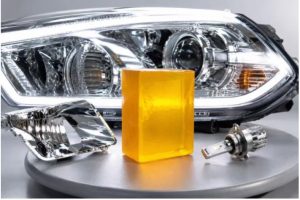
In the automotive lighting industry, bonding and sealing performance directly affect product durability, safety, and long-term reliability. Vehicle lamps are exposed to complex working environments, including outdoor low temperatures, high heat near the engine compartment, vibration, humidity, and long-term weathering. To meet these demanding requirements, Weasy Automotive Lighting Hot Melt Adhesive is specially developed for bonding and sealing applications in vehicle lighting products.

Designed for Automotive Lighting Applications

Weasy Automotive Lighting Hot Melt Adhesive is widely used for the bonding and sealing of lamp bases and lamp covers in various vehicle lighting systems, including:

  • Automotive headlights
  • Motorcycle lights
  • Electric vehicle lights
  • Other vehicle lighting assemblies

The adhesive provides strong bonding performance on different lamp substrates, such as metal, glass, and plastic, helping manufacturers achieve stable sealing, reliable adhesion, and long service life.

Excellent Temperature Resistance and Sealing Performance

Automotive lighting components must perform reliably under both high and low temperature conditions. Weasy Automotive Lighting Hot Melt Adhesive offers excellent adaptability to temperature changes, ensuring stable performance in harsh environments.

It can withstand extreme cold in outdoor conditions as well as high temperatures near the engine compartment. Even after long-term use, the adhesive maintains strong bonding and sealing performance, effectively preventing problems such as delamination, water leakage, and sealing failure.

Compared with silicone and standard PUR hot melt adhesives, Weasy Automotive Lighting Hot Melt Adhesive offers a simpler and more efficient application process. It also provides excellent cost-effectiveness while maintaining outstanding sealing reliability, making it a practical choice for modern automotive lighting production.

Multiple Models for Different Production Requirements

To meet different processing conditions and performance requirements, the product line includes several models:

TB3061, TB3062, TB3068TE, and TB3097H

The main technical range includes:

  • Softening point: 120°C–149°C
  • Viscosity at 180°C: 4,000–55,000 cP
  • Application temperature: 170°C–210°C
  • Open time: 70–120 seconds

Different models are suitable for different temperature resistance requirements, bonding conditions, and production processes. This allows the adhesive to be flexibly applied in both manual operation and fully automated automotive lighting production lines.

Stable Quality Backed by R&D and Manufacturing Expertise

With 16 years of experience in the polymer materials industry, Weasy has built strong technical capabilities in adhesive formulation development and production management. Our R&D team, consisting of master’s and doctoral degree holders, continuously works on improving product performance, stability, and application efficiency.

Supported by multiple patents and ISO full-system certification, Weasy follows strict quality control standards throughout the production process. From raw material selection to formulation development and final product inspection, every step is managed to ensure consistent product quality and reliable performance.

Supporting the Growth of New Energy Vehicles

As the new energy vehicle industry continues to grow, the demand for high-performance automotive lighting materials is increasing. Lighting systems for electric vehicles and modern automobiles require adhesives with stable weather resistance, strong sealing ability, and environmentally friendly characteristics.

Weasy Automotive Lighting Hot Melt Adhesive has become an important supporting material for automotive lighting manufacturers. With its excellent bonding strength, reliable sealing performance, efficient processing, and strong adaptability to different production conditions, it helps manufacturers improve production efficiency and ensure long-term product reliability.

Hot melt adhesive

Hot melt adhesive bonding solutions in eyeglass case manufacturing

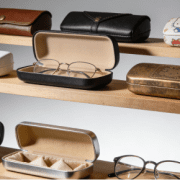
Hot melt adhesive provides an important bonding solution in the manufacturing process of eyeglass cases. Eyeglass cases are designed to protect optical products such as glasses and sunglasses from mechanical damage, dust contamination, and external pressure. Therefore, the structural integrity and bonding durability of eyeglass case products are extremely important quality indicators during production.

The application of hot melt adhesive in eyeglass case manufacturing helps improve assembly efficiency and product consistency. During production, hot melt adhesive can be heated to a molten state and applied to the bonding surface of different materials. After cooling and solidification, a stable adhesive layer is formed quickly, which is very suitable for high-volume production environments. This rapid bonding characteristic significantly shortens manufacturing cycles and improves factory throughput.

Hot melt adhesive also shows strong material compatibility in eyeglass case production. Eyeglass cases are often made of paperboard, synthetic leather, plastic composite materials, or textile-based decorative structures. High-performance hot melt adhesive can provide stable bonding effects across multiple substrate materials, reducing the complexity of production processes and lowering material switching costs.

Hot melt adhesive

Another important advantage of hot melt adhesive is its aging resistance performance. Eyeglass cases may be exposed to different temperature and humidity conditions during storage and transportation. Quality hot melt adhesive formulations can maintain stable bonding strength under long-term environmental changes, effectively reducing the risk of adhesive failure and structural deformation.
In addition, hot melt adhesive supports environmentally friendly manufacturing requirements. Modern eyeglass packaging industries are paying more attention to sustainable production methods. Hot melt adhesive does not contain harmful solvent components and helps reduce volatile organic compound emissions during production operations. This characteristic makes it highly suitable for green packaging manufacturing.

From a production management perspective, using hot melt adhesive can also help reduce labor cost and improve automation compatibility. Many eyeglass case manufacturing lines have adopted automated glue dispensing systems. Hot melt adhesive shows excellent flow stability under controlled heating conditions, ensuring continuous and uniform adhesive application.

Overall, hot melt adhesive provides a reliable, efficient, and environmentally friendly bonding technology for eyeglass case manufacturing industries, helping improve product quality, reduce production cost, and support modern packaging industrial development.

Hot melt adhesive

Hot Melt Adhesive Application in Picture Frame Manufacturing

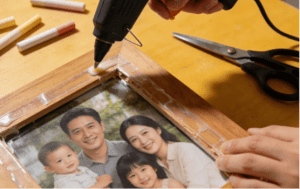
Hot melt adhesive is widely used in the picture frame industry, especially in the manufacturing and assembly processes of wooden, MDF, and decorative frames. Modern picture frame production emphasizes aesthetic quality, structural stability, and efficient mass production. As an important bonding material, hot melt adhesive plays a key role in improving manufacturing efficiency and ensuring product durability.

In picture frame production, hot melt adhesive is commonly applied in lamination and profile wrapping processes. Decorative materials such as PVC films, wood veneers, and decorative papers are bonded onto frame substrates including MDF and solid wood. This application requires strong adhesion, smooth surface appearance, and resistance to edge lifting or bubbling. The fast curing property of hot melt adhesive allows manufacturers to achieve continuous operation on high-speed profile wrapping lines.

Another important application is edge bonding and frame assembly. Hot melt adhesive is used to fix corner joints, attach backing boards, and secure structural components. Its rapid setting characteristic helps improve assembly efficiency and reduces the need for mechanical fasteners in small and medium-sized frames.Hot melt adhesive

Hot melt adhesive also demonstrates good compatibility with multiple materials, which is essential in picture frame manufacturing. Frames often combine different substrates such as wood, plastic, glass, and paperboard. A properly formulated hot melt adhesive can provide reliable bonding performance across these materials, ensuring overall structural integrity.

Temperature resistance is an important requirement in this industry. Picture frames are often exported and may experience temperature variations during transportation and storage. High-quality hot melt adhesives can maintain stable bonding strength under both high and low temperature conditions, preventing deformation, cracking, or delamination.

In addition, appearance performance is a key consideration. Picture frames are decorative products with high visual requirements. Hot melt adhesive must provide clean bonding lines, low odor, minimal stringing, and no discoloration to ensure the final product maintains a premium appearance.

From an environmental perspective, hot melt adhesive supports cleaner production. Compared with solvent-based adhesives, it does not release harmful volatile organic compounds during application. This aligns with the increasing demand for environmentally friendly manufacturing in global markets.

In terms of production automation, hot melt adhesive is highly suitable for modern manufacturing equipment such as profile wrapping machines and automatic dispensing systems. Its stable viscosity under controlled heating conditions ensures consistent application and improves product quality uniformity.

Overall, hot melt adhesive provides an efficient, reliable, and environmentally friendly bonding solution for the picture frame industry, supporting the development of high-quality, decorative, and cost-effective frame products.


Double Sided Tissue Tape: A Reliable Choice for Zipper Carton Sealing Applications

As the demand for high-quality packaging solutions continues to grow, Weasy’s cotton paper double-sided tape stands out as a leading choice for sealing high-end zipper cartons. This innovative tape combines strength, versatility, and eco-friendliness, making it an ideal solution for various bonding applications in the packaging industry.

Double sided Tissue Tape

The foundation of Weasy’s Double Sided Tissue Tape is its high-strength cotton paper, which provides exceptional durability and flexibility. The tape is coated on both sides with a specially formulated high-tack adhesive that is residue-free and environmentally friendly. This ensures that the tape not only performs well but also aligns with sustainability goals, making it a responsible choice for manufacturers.


One of the notable advantages of Weasy’s tape is its superior performance in low-temperature conditions. This feature is especially beneficial for applications where temperature fluctuations can impact adhesive effectiveness. The tape retains its strong bonding capabilities, ensuring that zipper cartons remain securely closed during shipping and handling, regardless of external conditions.


Moreover, Weasy’s Double Sided Tissue Tape is designed to be waterproof and moisture-resistant, providing an extra layer of protection for packaged goods. This is particularly important in postal and packaging industries, where products may be exposed to varying levels of humidity and moisture. The tape’s anti-rebound properties ensure that it adheres firmly to surfaces, preventing any unintended openings that could lead to product damage.

In practical terms, Weasy’s Double Sided Tissue Tape is ideal for sealing zipper cartons used in various sectors, including e-commerce, retail, and logistics. Its reliable performance and ease of use make it a preferred choice for manufacturers looking to enhance their packaging solutions.

In conclusion, Weasy’s Double Sided Tissue Tape offers a robust and effective solution for sealing high-end zipper cartons. Its combination of strength, low-temperature performance, and moisture resistance makes it a valuable asset for businesses in the packaging industry. By choosing Weasy, companies can enhance their packaging efficiency while ensuring product integrity and customer satisfaction..


Filament Tape

Single-Sided Cross Weave Filament Tape

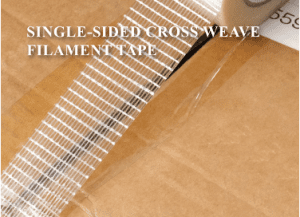
Single-sided cross weave filament tape is a heavy-duty industrial adhesive tape reinforced with fiberglass filaments woven in both the longitudinal and transverse directions. This cross-weave structure significantly enhances the tape’s tear resistance and tensile strength, giving it a balanced strength profile ideal for demanding packaging and reinforcement applications. The filaments are anchored onto a tough PET film backing, which is then coated with a high-performance pressure-sensitive adhesive.

Filament Tape

The cross-weave reinforcement provides superior durability compared with unidirectional filament tapes. The bidirectional fiber arrangement allows the tape to resist deformation, splitting, and tearing—even under multi directional stresses. This makes it ideal for securing irregular loads, reinforcing weak packaging materials, and stabilizing components during transport. Additionally, the woven design enhances abrasion resistance, enabling the tape to withstand rough handling common in shipping, construction, and manufacturing environments.

The adhesive layer ensures strong bonding to cardboard, plastic, metal, wood, and textile surfaces. It provides consistent adhesion even on slightly uneven or dusty substrates, which is advantageous in industrial settings. The tape also offers good resistance to temperature fluctuations and moisture, maintaining reliability during long storage periods or cross-border transport.

Cross weave filament tape is widely used for pallet unitization, heavy carton reinforcement, bundling of construction materials, securing metal parts, and general-purpose industrial reinforcement. It is commonly applied in export packaging, automotive parts logistics, hardware distribution, and large appliance transportation.

As global supply chains continue to expand, industries increasingly require packaging materials that can withstand long-distance transport and prevent in-transit damage. Single-sided cross weave filament tape meets these demands with superior strength and stability, making it a vital material in the modern logistics and manufacturing sectors.


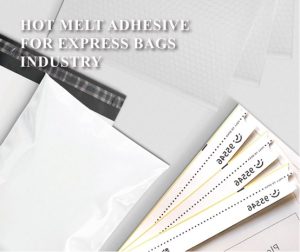
Hot Melt Adhesive for Express Bags Industry

Hot Melt Adhesive for Express Bags Industry

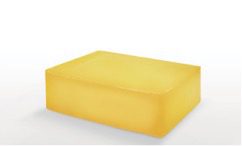
Hot melt adhesives formulated for the express bags (courier bags) industry are engineered to deliver instant bonding, robust security, and excellent processability on low-surface-energy substrates such as LDPE, LLDPE, or co-extruded films. These adhesives are typically delivered as hot-applied extrudates or coated molten formulations onto sealing strips integrated into the bag structure. Key functional demands include high initial hot-tack for immediate closure, irreversible bond strength to deter tampering, stable viscosity across operating temperatures for consistent application, and compatibility with high-speed converting lines.

Structurally, the product is a carefully balanced blend of thermoplastic polymers (commonly EVA, metallocene polyolefins, or tailored polyolefin copolymers), tackifiers, waxes, and additives that jointly control melt viscosity, open time, and final adhesive performance. Formulation adjustments enable fine-tuning: higher tackifier loads boost initial adhesion; specific polymer choices enhance peel strength and temperature resistance; and antioxidants or stabilizers improve shelf-life and thermal stability during processing.

Performance characteristics include rapid setting upon closure, strong peel values on low-energy films, resistant bonds across a broad temperature window (typically -20°C to +80°C service), and durable adhesion under mechanical stress and rough handling. For express bag applications, the adhesive must also show good aging properties—retaining bond integrity after

 storage and transport—and strong tamper-evident behavior: attempts to reopen the bag should either delaminate the substrate or produce clear visual evidence of interference.

Operational demands in converting require adhesives with narrow and repeatable melt viscosity profiles, low stringing during application, and stable behavior at high line speeds (often hundreds of meters per minute). Adhesives must also be compatible with lamination and slitting operations, and some formulations are optimized for solventless hot-coating processes to meet environmental and VOC concerns.

Applications cover courier bag sealing strips, tamper-evident security envelopes, adhesive closures on poly mailers, and permanently sealed luggage tags. They are critical to e-commerce logistics, secure document transport, and any application where parcel integrity is mission-critical. The adhesive enables manufacturers to produce user-activated, reliable seals that consumers can apply quickly while preserving parcel confidentiality and transit resilience.

Market dynamics are strongly tied to e-commerce volume growth, logistics automation, and security regulations. As global parcel shipments continue to surge, demand for dependable, high-performance sealing adhesives grows commensurately. Innovations focus on lowering processing temperatures for energy savings, enhancing adhesive performance on recyclable film substrates, and developing formulations compatible with bio-based polymers.

Sustainability pressures are prompting suppliers to explore recyclable adhesive systHot melt adhesiveems that allow the bag substrate to be reclaimed without contamination, and to reduce VOCs and processing energy. In summary, hot melt adhesives for express bags are a technically demanding, high-volume segment critical to modern logistics—balancing processability, security, and environmental considerations.
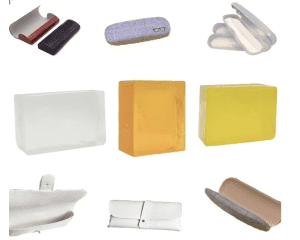
 

HOT MELT GLUE APPLICATION

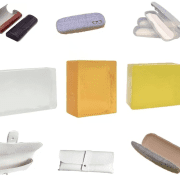
Application of Hot Melt Adhesives in Eyeglass Case Manufacturing

Hot melt adhesives have become an essential bonding material in the production of eyeglass cases due to their versatility, durability, and efficiency. These adhesives provide strong adhesion to a wide range of substrates, offer clean and efficient processing, and ensure long-term stability of the finished products. Depending on the type of eyeglass case—metal, plastic, leather, nylon, or wood—hot melt adhesives play a specific role in ensuring both functionality and aesthetics

For metal eyeglass cases, hot melt adhesives are mainly used to bond the inner lining materials, such as fabric or velvet, to the rigid metal shell. This creates a soft protective interior that prevents scratches on lenses while maintaining a firm structure. The quick-setting property of hot melts is particularly advantageous in mass production, where speed and precision are critical.

In plastic cases, hot melt adhesives are applied to secure inner layers, coverings, or decorative films. Plastics often require adhesives that can bond well despite smooth and sometimes low-energy surfaces. Formulated hot melts ensure reliable adhesion, preventing peeling or detachment during use. Additionally, the flexibility of the adhesive allows the case to open and close repeatedly without weakening the bond.

For leather eyeglass cases, hot melt adhesives serve both structural and aesthetic functions. They are used to attach leather or synthetic PU leather coverings to the inner stiffeners, often made of cardboard or plastic. Hot melts create a smooth, wrinkle-free surface while providing the strength needed for everyday handling. Their clean bonding ensures that no residue seeps through the leather surface, which is essential for premium-quality products.

Nylon and EVA-based eyeglass cases, often used for sports and outdoor eyewear, rely on hot melt adhesives for bonding outer nylon fabrics to molded EVA or plastic shells. These adhesives provide durability, flexibility, and resistance to temperature variations, ensuring the case maintains its protective qualities under different environmental conditions. The heat resistance of hot melts also ensures that the adhesive does not degrade during storage or outdoor use.

For wooden eyeglass cases, hot melt adhesives are typically employed to attach lining fabrics and cushioning materials inside the rigid wooden frame. Since wood is porous, hot melts penetrate slightly into the surface, forming a secure and lasting bond. This combination of natural wood aesthetics with reliable adhesive bonding produces cases that are both elegant and durable.

In conclusion, hot melt adhesives are indispensable in modern eyeglass case manufacturing. Their adaptability across different materials—metal, plastic, leather, nylon, and wood—ensures that manufacturers can achieve both structural integrity and visual appeal. By providing strong adhesion, fast processing, and long-term reliability, hot melt adhesives have become a cornerstone of efficient and high-quality eyeglass case production.

Filament Tape Residue Free

Residue-Free Filament Tape for worldwide use

Residue-free Filament Tape is an adhesive product designed to stick strongly but be removed completely without leaving behind any sticky or gummy residue. This type of tape is ideal for applications where clean removal is necessary, such as temporary repairs, securing temporary items, surface protection, or in professional settings like trade shows and construction, where messy cleanup would be problematic.


Home Appliance Industry. Used for temporary fixation during the transportation of appliances such as refrigerators, washing machines, and air conditioners.Secures refrigerator doors, glass shelves, water containers, and other components to prevent shifting or damage during transit.Leaves no adhesive residue after removal, ensuring the appliance’s exterior remains clean and aesthetically intact.