Reliable Bonding and Sealing Solution for Automotive Lighting

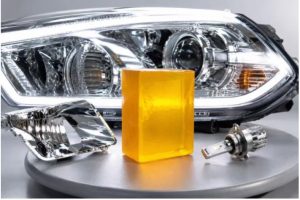
In the automotive lighting industry, bonding and sealing performance directly affect product durability, safety, and long-term reliability. Vehicle lamps are exposed to complex working environments, including outdoor low temperatures, high heat near the engine compartment, vibration, humidity, and long-term weathering. To meet these demanding requirements, Weasy Automotive Lighting Hot Melt Adhesive is specially developed for bonding and sealing applications in vehicle lighting products.

Designed for Automotive Lighting Applications

Weasy Automotive Lighting Hot Melt Adhesive is widely used for the bonding and sealing of lamp bases and lamp covers in various vehicle lighting systems, including:

  • Automotive headlights
  • Motorcycle lights
  • Electric vehicle lights
  • Other vehicle lighting assemblies

The adhesive provides strong bonding performance on different lamp substrates, such as metal, glass, and plastic, helping manufacturers achieve stable sealing, reliable adhesion, and long service life.

Excellent Temperature Resistance and Sealing Performance

Automotive lighting components must perform reliably under both high and low temperature conditions. Weasy Automotive Lighting Hot Melt Adhesive offers excellent adaptability to temperature changes, ensuring stable performance in harsh environments.

It can withstand extreme cold in outdoor conditions as well as high temperatures near the engine compartment. Even after long-term use, the adhesive maintains strong bonding and sealing performance, effectively preventing problems such as delamination, water leakage, and sealing failure.

Compared with silicone and standard PUR hot melt adhesives, Weasy Automotive Lighting Hot Melt Adhesive offers a simpler and more efficient application process. It also provides excellent cost-effectiveness while maintaining outstanding sealing reliability, making it a practical choice for modern automotive lighting production.

Multiple Models for Different Production Requirements

To meet different processing conditions and performance requirements, the product line includes several models:

TB3061, TB3062, TB3068TE, and TB3097H

The main technical range includes:

  • Softening point: 120°C–149°C
  • Viscosity at 180°C: 4,000–55,000 cP
  • Application temperature: 170°C–210°C
  • Open time: 70–120 seconds

Different models are suitable for different temperature resistance requirements, bonding conditions, and production processes. This allows the adhesive to be flexibly applied in both manual operation and fully automated automotive lighting production lines.

Stable Quality Backed by R&D and Manufacturing Expertise

With 16 years of experience in the polymer materials industry, Weasy has built strong technical capabilities in adhesive formulation development and production management. Our R&D team, consisting of master’s and doctoral degree holders, continuously works on improving product performance, stability, and application efficiency.

Supported by multiple patents and ISO full-system certification, Weasy follows strict quality control standards throughout the production process. From raw material selection to formulation development and final product inspection, every step is managed to ensure consistent product quality and reliable performance.

Supporting the Growth of New Energy Vehicles

As the new energy vehicle industry continues to grow, the demand for high-performance automotive lighting materials is increasing. Lighting systems for electric vehicles and modern automobiles require adhesives with stable weather resistance, strong sealing ability, and environmentally friendly characteristics.

Weasy Automotive Lighting Hot Melt Adhesive has become an important supporting material for automotive lighting manufacturers. With its excellent bonding strength, reliable sealing performance, efficient processing, and strong adaptability to different production conditions, it helps manufacturers improve production efficiency and ensure long-term product reliability.

Hot melt adhesive

Hot melt adhesive bonding solutions in eyeglass case manufacturing

Hot melt adhesive provides an important bonding solution in the manufacturing process of eyeglass cases. Eyeglass cases are designed to protect optical products such as glasses and sunglasses from mechanical damage, dust contamination, and external pressure. Therefore, the structural integrity and bonding durability of eyeglass case products are extremely important quality indicators during production.

The application of hot melt adhesive in eyeglass case manufacturing helps improve assembly efficiency and product consistency. During production, hot melt adhesive can be heated to a molten state and applied to the bonding surface of different materials. After cooling and solidification, a stable adhesive layer is formed quickly, which is very suitable for high-volume production environments. This rapid bonding characteristic significantly shortens manufacturing cycles and improves factory throughput.

Hot melt adhesive also shows strong material compatibility in eyeglass case production. Eyeglass cases are often made of paperboard, synthetic leather, plastic composite materials, or textile-based decorative structures. High-performance hot melt adhesive can provide stable bonding effects across multiple substrate materials, reducing the complexity of production processes and lowering material switching costs.

Hot melt adhesive

Another important advantage of hot melt adhesive is its aging resistance performance. Eyeglass cases may be exposed to different temperature and humidity conditions during storage and transportation. Quality hot melt adhesive formulations can maintain stable bonding strength under long-term environmental changes, effectively reducing the risk of adhesive failure and structural deformation.

In addition, hot melt adhesive supports environmentally friendly manufacturing requirements. Modern eyeglass packaging industries are paying more attention to sustainable production methods. Hot melt adhesive does not contain harmful solvent components and helps reduce volatile organic compound emissions during production operations. This characteristic makes it highly suitable for green packaging manufacturing.

From a production management perspective, using hot melt adhesive can also help reduce labor cost and improve automation compatibility. Many eyeglass case manufacturing lines have adopted automated glue dispensing systems. Hot melt adhesive shows excellent flow stability under controlled heating conditions, ensuring continuous and uniform adhesive application.

Overall, hot melt adhesive provides a reliable, efficient, and environmentally friendly bonding technology for eyeglass case manufacturing industries, helping improve product quality, reduce production cost, and support modern packaging industrial development.

Hot melt adhesive

Hot Melt Adhesive Application in Picture Frame Manufacturing

Hot melt adhesive is widely used in the picture frame industry, especially in the manufacturing and assembly processes of wooden, MDF, and decorative frames. Modern picture frame production emphasizes aesthetic quality, structural stability, and efficient mass production. As an important bonding material, hot melt adhesive plays a key role in improving manufacturing efficiency and ensuring product durability.

In picture frame production, hot melt adhesive is commonly applied in lamination and profile wrapping processes. Decorative materials such as PVC films, wood veneers, and decorative papers are bonded onto frame substrates including MDF and solid wood. This application requires strong adhesion, smooth surface appearance, and resistance to edge lifting or bubbling. The fast curing property of hot melt adhesive allows manufacturers to achieve continuous operation on high-speed profile wrapping lines.

Another important application is edge bonding and frame assembly. Hot melt adhesive is used to fix corner joints, attach backing boards, and secure structural components. Its rapid setting characteristic helps improve assembly efficiency and reduces the need for mechanical fasteners in small and medium-sized frames.Hot melt adhesive

Hot melt adhesive also demonstrates good compatibility with multiple materials, which is essential in picture frame manufacturing. Frames often combine different substrates such as wood, plastic, glass, and paperboard. A properly formulated hot melt adhesive can provide reliable bonding performance across these materials, ensuring overall structural integrity.

Temperature resistance is an important requirement in this industry. Picture frames are often exported and may experience temperature variations during transportation and storage. High-quality hot melt adhesives can maintain stable bonding strength under both high and low temperature conditions, preventing deformation, cracking, or delamination.

In addition, appearance performance is a key consideration. Picture frames are decorative products with high visual requirements. Hot melt adhesive must provide clean bonding lines, low odor, minimal stringing, and no discoloration to ensure the final product maintains a premium appearance.

From an environmental perspective, hot melt adhesive supports cleaner production. Compared with solvent-based adhesives, it does not release harmful volatile organic compounds during application. This aligns with the increasing demand for environmentally friendly manufacturing in global markets.

In terms of production automation, hot melt adhesive is highly suitable for modern manufacturing equipment such as profile wrapping machines and automatic dispensing systems. Its stable viscosity under controlled heating conditions ensures consistent application and improves product quality uniformity.

Overall, hot melt adhesive provides an efficient, reliable, and environmentally friendly bonding solution for the picture frame industry, supporting the development of high-quality, decorative, and cost-effective frame products.


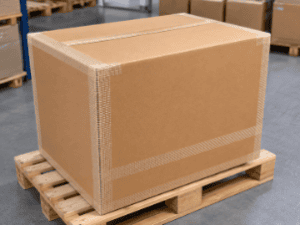
Double Sided Tissue Tape: A Reliable Choice for Zipper Carton Sealing Applications

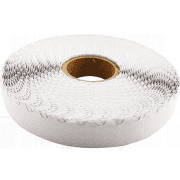
As the demand for high-quality packaging solutions continues to grow, Weasy’s cotton paper double-sided tape stands out as a leading choice for sealing high-end zipper cartons. This innovative tape combines strength, versatility, and eco-friendliness, making it an ideal solution for various bonding applications in the packaging industry.

Double sided Tissue Tape

The foundation of Weasy’s Double Sided Tissue Tape is its high-strength cotton paper, which provides exceptional durability and flexibility. The tape is coated on both sides with a specially formulated high-tack adhesive that is residue-free and environmentally friendly. This ensures that the tape not only performs well but also aligns with sustainability goals, making it a responsible choice for manufacturers.


One of the notable advantages of Weasy’s tape is its superior performance in low-temperature conditions. This feature is especially beneficial for applications where temperature fluctuations can impact adhesive effectiveness. The tape retains its strong bonding capabilities, ensuring that zipper cartons remain securely closed during shipping and handling, regardless of external conditions.


Moreover, Weasy’s Double Sided Tissue Tape is designed to be waterproof and moisture-resistant, providing an extra layer of protection for packaged goods. This is particularly important in postal and packaging industries, where products may be exposed to varying levels of humidity and moisture. The tape’s anti-rebound properties ensure that it adheres firmly to surfaces, preventing any unintended openings that could lead to product damage.

In practical terms, Weasy’s Double Sided Tissue Tape is ideal for sealing zipper cartons used in various sectors, including e-commerce, retail, and logistics. Its reliable performance and ease of use make it a preferred choice for manufacturers looking to enhance their packaging solutions.

In conclusion, Weasy’s Double Sided Tissue Tape offers a robust and effective solution for sealing high-end zipper cartons. Its combination of strength, low-temperature performance, and moisture resistance makes it a valuable asset for businesses in the packaging industry. By choosing Weasy, companies can enhance their packaging efficiency while ensuring product integrity and customer satisfaction..